
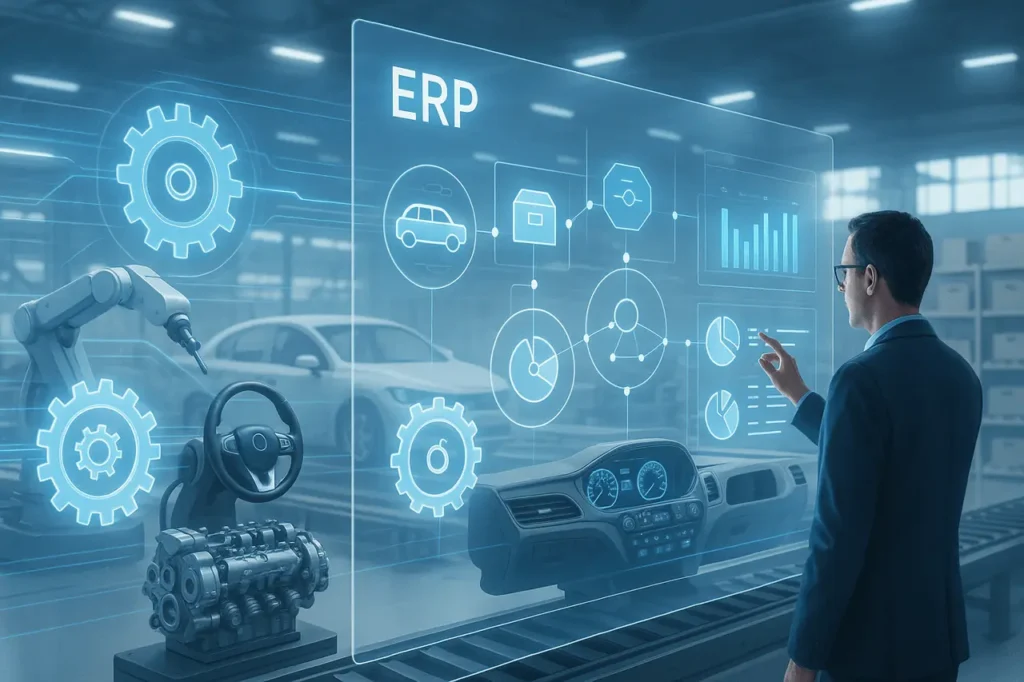
In the highly competitive field of automobiles, effective management of parts is vital to keeping high-performance operations running smoothly through reducing downtime and providing customer satisfaction. Automotive manufacturers, suppliers and distributors oversee thousands of parts each day, including bolts and sensors to electronic engines and systems. If there is no centralised database managing these parts across multiple warehouses, suppliers, and even customers, it could be chaotic.
This is the point at which ERP (Enterprise Resource Planning) integration is a key element. Through the integration of all operational systems – inventory, manufacturing, procurement, finance, and sales- ERP integration is a central centre for real-time data visibility and efficient processes. This article explains the ways in which ERP integration has revolutionised automotive parts management, its advantages, as well as the key features and best practices for implementation.
What is ERP Integration?
ERP Integration is the procedure of linking an ERP system to other databases and digital tools within an organisation, such as inventory management and CRM, procurement, and supply chain management systems. In the automotive industry, it is the process of integrating multiple departments, distributors, suppliers and departments into a single digital ecosystem.
Instead of having to update data across different systems manually, ERP integration ensures continuous data flow between the various systems. This results in quicker decision-making, better Forecasting and increased co-operation across value chains.
What are the Challenges of Automotive Parts Management
Before integration, auto firms typically face a variety of operational problems:
- The Fragmented Data Systems: Inventory, procurement, and sales typically operate in silos, which can lead to inconsistent inventory levels and the availability of parts.
- Complex supply chains: Automotive manufacturers procure parts across the globe, and it is challenging to monitor deliveries and performance of vendors manually.
- Poor Forecasting: Without the integration of data, forecasting parts demand isn’t as reliable and can result in shortages or overstocking.
- Hand-written Workflows: Using spreadsheets or other software that is not connected causes delays, errors in data entry, and excessive administrative costs.
- Problems with Compliance and Traceability: Due to the increasing demands from the regulatory authorities, keeping track of the source of each component’s compliance data is crucial but difficult without central control.
ERP integration solves these issues by synchronising all data and automating the key processes that allow businesses to run more efficiently and with greater precision.
How ERP Integration Can Help Streamline Automotive Parts Management
1. Centralised Inventory Control
A fully integrated ERP system that consolidates inventory data from multiple suppliers and warehouses into one dashboard.
- Managers are able to view live stock levels across all locations.
- Automated alerts are sent out when parts meet the reorder thresholds.
- Serial number tracking and batching allow complete traceability of each part.
Centralisation reduces the risk of overstocking, decreases stockouts and improves warehouse utilisation.
2. Improved visibility of the Supply Chain
ERP integration connects all aspects of the supply chain from the suppliers of raw materials to dealerships–all on one platform.
- The suppliers can modify shipping details directly within the system.
- Teams in logistics can track the movement of components in real-time.
- Managers gain insight into the performance of suppliers and timelines for delivery.
The result is increased Efficiency, faster order fulfilment and improved coordination across all stakeholders.
3. Automated Procurement and Ordering
With ERP automation, procurement teams no longer have to monitor their inventory manually for shortages.
- When components reach a minimum threshold, the ERP system will automatically create purchase orders.
- Contract terms and pricing for vendors are pre-integrated to ensure consistent and dependable buying.
- The system monitors the status of orders as well as invoices in real time.
This reduces human error, assures timely replenishment and strengthens the relationships with suppliers.
4. Better Demand Forecasting
By utilising the historical information, trends in sales, and real-time analytics, ERP software can provide demand forecasts that are based on data.
- Predicts seasonal fluctuations in demand.
- Identifies obsolete or slow-moving parts.
- Aids production teams in planning their plans accurately to prevent overproduction.
A precise forecasting process ensures that the appropriate parts are in stock in the event of need, which reduces carrying costs and waste.
5. Complete Integration CRM and Sales Systems
ERP integration is linked to the Customer Relationship Management (CRM) tools to ensure that inventory and sales data are synchronised.
- Sales representatives can verify the availability of parts while placing orders.
- Customer service is able to provide precise delivery times.
- Managers are able to analyse sales data to find high-demand parts.
This results in quicker service, fewer order mistakes, and increased customer satisfaction.
6. Compliance as well as Quality Assurance
In the automobile industry, regulatory compliance and traceability of parts are not negotiable. ERP integration can make this simpler by:
- Automatic documentation as well as an audit trail for each transaction.
- Real-time tracking of batches of parts, serial numbers, batch numbers, and supplier certifications.
- Quality management modules are integrated into the system that identify parts that are not compliant.
This assures that every part conforms to industry standards and can be identified easily in the event of recalls.
7. Analytical and Performance Insights
ERP systems have built-in analytics dashboards, which provide essential performance indicators (KPIs) such as:
- The rate of turnover of inventory
- Supplier performance metrics
- Timelines for delivery and accuracy of delivery
- Cost per piece or per order
Based on these data, managers can take informed decisions based on data to improve processes, cut expenses, and boost Efficiency.
The Benefits of ERP Integration into Automotive Parts Management
- Reduced Operating Costs: Automation reduces manual labour and eliminates waste.
- Better Efficiency: A streamlined process improves Efficiency across all departments.
- Real-Time Accessibility: Managers can monitor inventory, procurement, and the production process in real-time.
- Better Collaboration: Data sharing allows better coordination between teams as well as suppliers.
- Improved Customer Experience: Speedier delivery and precise part tracking lead to a better customer experience.
- Scalability: ERP solutions can quickly be modified as the company expands and introduces brand-new products.
Best Methods to Implement ERP Integration
- Review the present system: Identify data silos and the key integration points.
- Select the right ERP Platform: Choose one that has automotive-specific workflows and APIs that allow seamless integration.
- The plan for data migration with care: Ensure all existing data is organised and clean prior to integrating.
- Training Staff: Provide hands-on training to ensure a smooth transition.
- Monitor and optimise: Continuously analyse performance data to improve processes after implementation.
Real-World Example
A top automotive distributor established an ERP integration to connect its warehouse, sales and supply systems. Before integration, the process of processing orders was a lengthy process that required manually entering data. After integration, all orders were automatically completed, and inventory updates were made in real-time. The company has reduced errors on orders by 40%, improved the delivery time by 30% and reduced the cost of stock that was not used by 25%, demonstrating the tangible benefits of ERP integration.
Final Thoughts
ERP integration is a popular alternative, but it’s vital for all auto companies that want to stay relevant in today’s increasingly information-driven world. By connecting disparate systems in order to automate critical workflows and deliver pertinent data, ERP solutions empower automotive businesses to manage their components efficiently and in a precise way.
From enhancing control over inventory to ensuring customer satisfaction and compliance, ERP integration lays the foundation for a quicker and more efficient, as well as a more integrated distribution chain.
FAQs
1. What does ERP integration mean for auto companies?
ERP integration connects all business applications–inventory, purchasing and sales, as well as finance– into one platform that enables instant data exchange and improved operational Efficiency.
2. How can ERP assist with managing inventory?
ERP automates stock tracking and provides real-time information on the levels of inventory, and triggers alerts to replenish stock, which ensures the highest levels of inventory.
3. Is ERP integration appropriate for small-sized automotive businesses?
Yes. A lot of modern ERP solutions can be scalable and cloud-based, which allows small to medium automotive firms to gain the automation and analytics they require without hefty infrastructure expenses.
4. What is the length of time for ERP integration?
Implementation times differ based on the size of the company and the complexity of the system, as well as the requirements for migration of data. However, they typically vary between 3 and 9 months.
5. What are the most important ERP functions for managing automotive parts?
Essential features include the control of inventory, supplier management, demand forecasting, quality control and analytics dashboards that are real-time.