
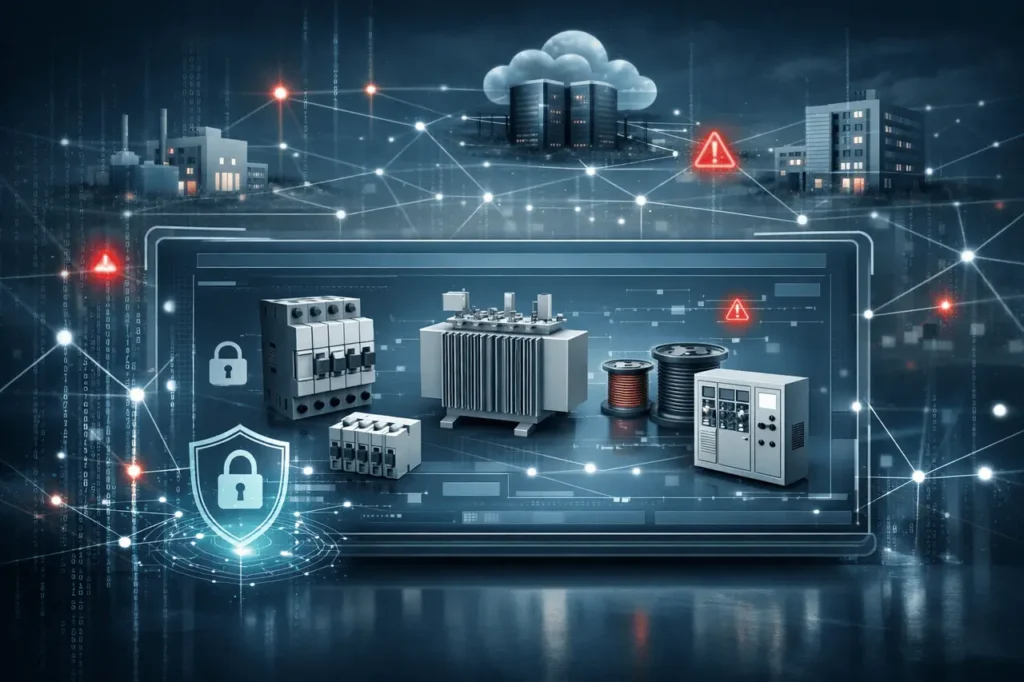
Electric Product Catalogue (EPC) Systems are at the heart of the current electrical supply chains. They manage, store, and disseminate precise product information to distributors, manufacturers, utility EPC vendors, and purchasing teams. As EPC platforms become more interconnected and coupled with ERP systems, cloud services, and partner networks, their vulnerability to cybersecurity threats grows.
Security risks in the EPC system are not just a figment of imagination. They pose an increasing operational risk that directly impacts data integrity, business continuity, regulatory compliance, and confidence in the electronic ecosystem.
This article explains what EPC Systems are, why hackers increasingly target them, the latest threat landscape, and how businesses can combat these risks with proven best practices aligned with standards.
What Is an EPC System?
The Electrical Product Catalogue (EPC) system is a digital repository structured to store commercial and technical information about electrical products, such as:
- Specifications and certifications for products
- Bills of Materials and compatibility information
- Prices, accessibility, and lifecycle state
- Manufacturer and supplier names
EPC systems are used in construction, procurement, engineering operations, and maintenance workflows. Because they typically integrate with ERP, PLM, and procurement platforms, EPC systems often store or affect mission-critical information.
Why Cybersecurity Risks in EPC Systems Matter?
Cyberattacks involving EPC systems could result in more than IT disruption. The catalogue’s data could be corrupted, leading to mistakes across design, procurement, and operations.
Key impacts include:
- Incorrect product selection in engineering projects
- The delay in the supply chain caused by manipulated availability information
- Compliance with regulations is not met if certification data is altered
- Losses in financials resulting from pricing and contract manipulation
As digital transformation speeds up across the industrial and electrical sectors, EPC systems have become an attractive target for cybercriminals.
New and Emerging Threats Targeting EPC Systems
Expanded Attack Surface Through Integration
Modern EPC platforms are not operating independently. APIs link them to suppliers’ ERP systems portals, ERP systems, and cloud-based analytics tools.
Each integration introduces:
- Additional authentication endpoints
- Interfaces to exchange data, which can be used to gain access to
- Dependency risks are a possibility if the systems that are connected to it are compromised
Unsecured APIs are becoming a common attack vector for hackers.
Supply Chain and Third-Party Risks
EPC Systems rely on data sourced from various external sources, such as distributors and manufacturers. An attack on any downstream provider could lead to inaccurate or corrupted data in the catalogue.
This risk is consistent with broader supply chain attacks highlighted by organisations such as the National Institute of Standards and Technology.
Credential Theft and Unauthorised Access
EPC platforms are typically used by a variety of user groups, including contractors, internal teams, and partners. Insecure access controls can lead to:
- Credential stuffing attacks
- Privilege escalation
- Insider threats, both accidental and malicious
Once hackers gain access, they can stealthily alter catalogue information, avoiding immediate notice.
Data Integrity Attacks
In contrast to ransomware, attacks on data integrity seek to modify information rather than interrupt access.
Within the EPC system, this could include:
- Technical specifications that are modified
- Modifying fields for compliance or certification
- Changing approved vendor references
These changes can remain undetected until downstream failures occur.
Cloud Configuration Weaknesses
A large number of EPC platforms are currently hosted in the cloud. Unconfigured storage, identity policy or network rules could expose sensitive catalogue information.
Cloud security guidelines issued by the International Electrotechnical Commission and ISO emphasise the importance of secure configuration as a fundamental control, yet misconfigurations remain common.
How do Cybersecurity Risks in EPC Systems Typically Manifest?
| Risk Category | Description | Potential Impact |
|---|---|---|
| Unauthorized Access | Weak authentication or role management | Data theft or manipulation |
| API Exploits | Insecure or undocumented interfaces | Large-scale data exposure |
| Supply Chain Poisoning | Compromised upstream data sources | Incorrect engineering decisions |
| Insider Misuse | Excessive user privileges | Silent data integrity loss |
| Cloud Misconfiguration | Publicly exposed storage or services | Regulatory and reputational damage |
Key Benefits of Addressing EPC Cybersecurity Proactively
Organisations that invest in EPC security of their systems gain tangible benefits:
- Higher trust in catalogue data accuracy
- Reduction in the risk of compliance and operational risks
- More rapid incident detection and faster response
- More reliable supplier and partner trust
Security is an enabler of trust rather than a hindrance to efficiency.
Limitations and Ongoing Challenges
Despite best practices, securing EPC systems presents persistent challenges:
- Platforms for catalogues that aren’t modernised and have no security measures
- complex user communities, with different security maturity
- Limited access to third-party practices for handling data
- The difficulty of validating the integrity of data at large
These issues require continual management, not just one-time fixes.
Practical Security Considerations for EPC Systems
Strengthen Identity and Access Management
Access to EPC systems must be based on least privilege guidelines:
- Role-based access is aligned with job tasks
- Multiple-factor authentication is available for users with privileges
- Automated deprovisioning and regular access checks
Secure APIs and Integrations
Organisations should:
- Inventory all EPC-related APIs
- Enforce strong authentication and authorisation
- Examine API usage patterns for suspicious behaviour
Implement Data Integrity Controls
Effective measures include:
- Verification and audit trail in the event of catalogue modifications
- Automatic validation of crucial fields
- Alerts for sudden or high-risk changes
Align With Recognised Security Frameworks
Although EPC systems are specific to a particular domain, their security may be compatible with general frameworks such as those published by the National Institute of Standards and Technology and ISO standards for the management of security information.
EPC Systems vs Traditional Product Catalogue Security
| Aspect | Traditional Catalogs | Modern EPC Systems |
|---|---|---|
| Deployment | On-premise, isolated | Cloud-based, integrated |
| Threat Exposure | Limited | High due to connectivity |
| Data Volume | Static | Dynamic and real-time |
| Security Controls | Perimeter-focused | Identity- and data-centric |
My Final Thoughts
Security risks in cybersecurity within EPC systems are indicative of a wider shift in how digital product information is generated, shared, and secured. As the Electric Product Catalogues evolve into interconnected systems, they can address the full complexity of current cybersecurity threats.
Companies that view EPC security as a top strategic concern, focusing on integration security, identity, and data integrity and governance, are better placed to ensure reliability, accuracy, and trust. In the future, EPC systems will remain the foundation of the electronic supply chain, making robust cybersecurity a vital luxury to ensure the long-term reliability of operations.
FAQs: Cybersecurity Risks in EPC Systems
1. What is it that makes EPC systems a security threat?
EPC systems can aggregate valuable commercial and technical data. They are tightly integrated into business and workflow systems, which makes them a target for data theft and sabotage.
2. Is it true that EPC systems are considered to be critical infrastructure?
While they’re not infrastructure in themselves, EPC systems support critical industrial and electrical operations and can increase the impact of any potential compromise.
3. What are supply chain issues? How do they impact EPC systems?
If a provider’s information source is compromised, fraudulent or inaccurate data could be inserted into the EPC system and transmitted across downstream channels without detection.
4. Are cloud-hosted EPC systems safe?
Yes, but only with proper configuration, strong identity controls, continuous monitoring, and shared accountability.
5. What is the greatest cybersecurity risk present in EPC systems right now?
Security breaches that compromise data integrity rank among the most risky because they can corrupt decision-making across procurement and engineering processes.
Also Read –