
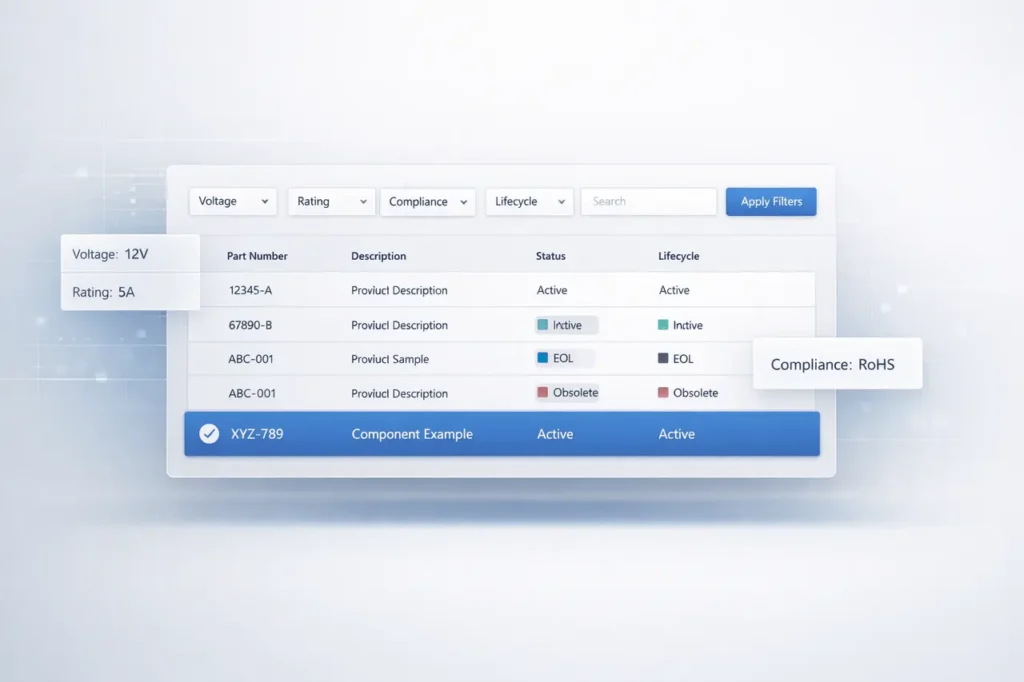
Best practices for placing part orders through EPC are crucial for businesses that depend on accurate, time-bound purchasing of electronic components. An Electronic Product Catalog (EPC) provides structured information about products that allows quicker identification, validation, and the ordering of components.
If implemented properly, EPC-driven ordering can reduce mistakes, reduce procurement times, and enhance visibility into the supply chain. This guide will outline what EPC-based ordering is, why it is important, and how you can optimize it to improve long-term efficiency.
In this article, we will explore Best Practices for Part Ordering via EPC, including how to improve ordering accuracy, reduce procurement errors, streamline workflows, and ensure lifecycle and compliance validation through structured electronic product catalogue systems.
What Is Part Ordering via EPC?
Part-ordering via EPC involves determining, verifying, and purchasing components using an organised Electronic Catalogue of Products.
An EPC typically consists of:
- Manufacturer-approved product data
- Technical specification
- Part numbers as well as variations
- Details on certification and compliance
- Lifecycle and availability information
Unlike manual ordering techniques, EPC systems rely on standardized, searchable digital records to ensure accuracy.
Why Best Practices for Part Ordering via EPC Matter?
Subtle variations in voltage rating, form factor, conformance standards, or compatibility are typically characteristic of electrical components. Minor mistakes in ordering can result in:
- Installation delays
- Project overruns
- Safety risks
- Costs for return and restocking
Implementing industry-standard best practices helps reduce risk and ensure efficient procurement.
Core Benefits of EPC-Based Ordering
| Benefit | Impact on Procurement |
|---|---|
| Improved Accuracy | Reduces incorrect part selection |
| Faster Search & Filtering | Shortens sourcing time |
| Standardized Data | Ensures consistent documentation |
| Lifecycle Visibility | Prevents ordering obsolete parts |
| Compliance Assurance | Supports regulatory alignment |
These advantages are important in the field of industrial automation, utility, infrastructure, and projects.
Best Practices for Part Ordering via EPC
1. Standardize Product Data Before Ordering
Ensure that descriptions, part numbers, and specifications adhere to standards-based formats.
The key actions are:
- Align ERP internal codes to EPC identifiers
- Use manufacturer-approved naming conventions
- Validate measurement units (e.g., dimensions, voltage, current, etc.)
Standardization prevents duplicate entries and inconsistencies.
2. Use Advanced Search and Filtering Properly
Modern EPC platforms support filtering by:
- Electrical rating
- Application type
- Compliance standards
- Environmental classification
Instead of relying solely on keywords, use technical filters to find compatible components. This reduces the likelihood of finding similar but incompatible components.
3. Verify Technical Specifications Carefully
Before confirmation of an order:
- Cross-check current and voltage ratings
- Confirm mounting type
- Review certification requirements
- Validate environmental ratings (IP class, temperature range)
Verification of technical capabilities should be part of every procurement process, particularly for safety-sensitive systems.
4. Monitor Product Lifecycle Status
A variety of EPC systems have indicators for lifecycles, like:
- Active
- Available in limited quantities
- End-of-life (EOL)
- Obsolete
Ordering obsolete parts can cause long-term maintenance problems. Make sure you verify the lifecycle status before making a purchase.
5. Integration of EPC to ERP and Procurement Systems
Integration with the Electronic Product Catalog and enterprise systems helps improve coherence.
The benefits of integrating include:
- Automatic data synchronization
- Reduction of mistakes in manual entries
- Real-time inventory validation
- Streamlined workflows for approval
Systems that aren’t connected increase the chance of having outdated or incorrect information.
6. Maintain Version Control and Audit Trails
Product specifications can change over time due to new regulations or design changes.
Best practices include:
- Logging specification updates
- Recording order approvals
- Maintaining revision history
Audit trails help resolve disputes and support compliance documentation.
Traditional Ordering vs EPC-Based Ordering
| Factor | Traditional Ordering | EPC-Based Ordering |
|---|---|---|
| Data Source | Catalog PDFs or emails | Centralized digital database |
| Error Rate | Higher risk of mismatch | Reduced via structured data |
| Speed | Manual search | Filter-based search |
| Lifecycle Visibility | Limited | Often included |
| Integration | Manual entry | ERP/API integration |
A structured approach to EPC systems enables tangible gains in efficiency and control.
Common Challenges in EPC Part Ordering
Even with digital systems, issues can still arise.
Data Inconsistency
If the supplier’s data isn’t standardized, differences can be observed between catalog entries and inside systems.
Training Gaps
People unfamiliar with the latest filtering tools may resort to manual procedures, which can reduce EPC efficiency.
Incomplete Integration
Partial integration of the system could result in duplicate data or obsolete stock information.
The solution to these issues requires a continuous process of governance and discipline.
Practical Considerations for Organizations
When you are implementing the EPC or optimizing its use for procurement
- Establish clear internal ordering guidelines
- Assign data governance responsibility
- Audit regularly the records of your product
- Help procurement teams train with advanced searching tools
- Review lifecycles and compliance information
These measures increase the reliability of the entire chain.
How EPC Improves Supply Chain Efficiency?
Digital Product Catalog systems support the broader goal of supply chain management:
- Improved forecasting by precise SKU data
- Faster project execution
- Better compliance tracking
- enhanced collaboration between procurement and engineering
In highly electrical environments, accurate data can reduce the time required for downstream rework and installation delays.
My Final Thoughts
The best practices for part-ordering through EPC focus on data accuracy, structured workflows, lifecycle awareness, and system integration. If organizations standardize product information, use sophisticated filters, and ensure proper oversight, they dramatically reduce the risk of procurement errors and operational lags.
As supply chain processes evolve toward greater digitization, EPC-driven purchasing is a crucial element for effective, efficient, and future-proof electronic procurement.
Frequently Asked Questions (FAQs)
1. What is the main benefit of acquiring parts through EPC?
The most important benefit is the increased accuracy. The structured product information reduces the risk of incorrect part selection and the associated return costs.
2. How does EPC reduce procurement errors?
EPC systems employ standard filters and technical specifications to ensure components meet the specifications.
3. Are EPC systems integrated into ERP software?
Yes. Many EPC platforms support ERP integration, enabling synchronization of processes, data, and inventory.
4. How can I stay away from ordering obsolete parts from EPC?
Always check the lifecycle status before confirmingconfirming an order, and review manufacturer updates frequently.
5. Are EPC orders appropriate for small-sized firms?
Yes. Even smaller businesses can benefit from fewer errors and faster sourcing, especially when they deal with many electrical SKUs.
6. What information must be verified before placing the EPC order?
Verify current, voltage, compliance standard, mounting setup, and rating for environmental and lifecycle conditions.
Also Read –