
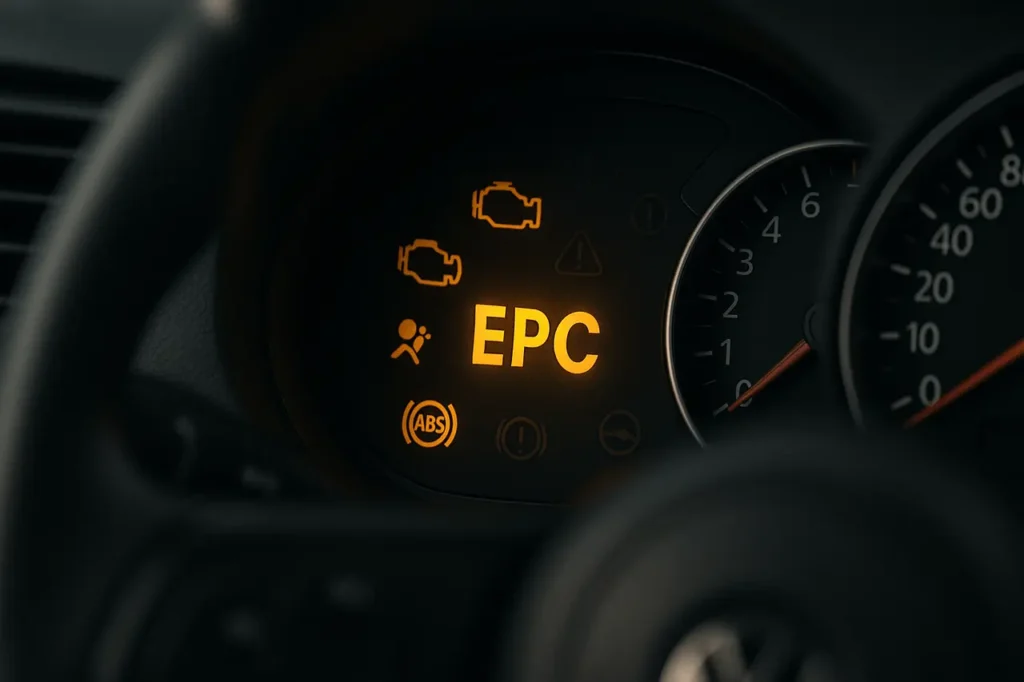
The EPC warning light can be one of many indicators displayed on your dashboard, which can make a Volkswagen driver uncomfortable, particularly when driving. If you’ve ever passed by the instrument cluster of your car and noticed the glowing symbol, usually showing a small engine or an arrow symbolising a throttle, it’s likely that you’re interested in the meaning behind it and what the ideal time is to pay attention.
In this thorough guide, we’ll look at what EPC light is, exploring its causes, common triggers, and the diagnostic techniques that can be used to identify the most efficient methods to fix it.
Whichever model you decide to drive, such as the Jetta, Passat, Tiguan or Golf, having knowledge of this warning can help maintain your vehicle’s performance and prevent costly breakdowns.
What Is the EPC Light?
EPC is an acronym for Electronic Power Control. The light is a part of the car’s onboard diagnostics system. It is typically used within Volkswagen Group vehicles, including Volkswagen (VW), Audi, Seat, and Skoda. But similar systems could be found in other brands of cars under various names.
It is a sign that the EPC indicator is a sign of the presence of an issue in the electronic control systems, which is usually related to the following components:
- It is the electronic throttle
- The control of traction
- It is the Cruise Control
- It is the Engine Control Unit (ECU)
- It is the brake light switch.
- It is the sensor for the accelerator pedal.
When the light comes on, the computer in your car detects a problem in one of these systems, which can result in reduced performance as well as “limp mode” to avoid any further destruction.
What Happens When the EPC Light Comes On?
If the EPC light is on, your vehicle could automatically enter “limp mode”. Limp mode decreases the power of your engine and limits functions to safeguard the internal systems of your vehicle from damage that could be severe.
It is possible to notice signs like:
- Power or acceleration reduced
- Irregular idle
- The difficulty in maintaining speed
- Cruise control deactivated
- Warning lights, such as “Check Engine”, also appear
In this state, driving for long periods of time is not advised. The EPC system is unable to ensure safety until the problem is identified and rectified.
The Meaning Behind the EPC Light
The EPC indicator on VW vehicles indicates problems with the electrical power control that affect functions such as throttle response and ABS, cruise control and ESC. When it is on, it indicates an overall power management issue, which often results in a slower acceleration or reduced RPMs.
It’s basically a precautionary measure that triggers “limp mode” to prevent significant damage. It also allows you to travel safely to a repair centre. If you don’t pay attention, it could lead to serious transmission or engine issues. The EPC warning light can also show up along with other warnings, providing clues to the source of the problem.
Common Causes of the EPC Light
Understanding the reason why the EPC light is on involves knowing the interconnected nature of the light. These are the most common causes, based on information from service records at VW dealerships:
- Throttle System Problems: A throttle body, or accelerator pedal sensor, may be damaged due to carbon build-up, wiring wear and sensor drift. This is particularly frequent in vehicles with higher mileage.
- Sensor failures: Components such as sensors like the mass airflow (MAF) sensor, crankshaft position sensor or camshaft sensor supply vital information that is sent to the ECU. The effects of heat exposure, dirt or age may cause incorrect readings and trigger the flashing light.
- Brake light switch Problems: A defective switch, often neglected, causes problems with signals between the throttle and brakes. EPC program coordinates the braking to provide security features.
- Electrical or Battery Issues: Low voltage from an old battery or corroded connections could confuse the ECU by mimicking throttle issues. This is a straightforward but frequently occurring trigger.
- Traction and Stability Glitch: Issues with these ESC and ABS modules may result in EPC alerts, particularly on slippery roads or when reckless driving.
- Air Emissions and Intake Faults: An untidy intake hose, a clogged or blocked air filter, or a failing oxygen sensor could disrupt the mixture of fuel and air, causing the indicator light to flash.
- Fuel System Inconsistencies Problems with timing, injectors, or even low oil levels (which make the engine more stressed) complete the list.
The effects of environmental factors such as extreme temperatures or road debris could make these worse, while software issues in older models might necessitate ECU reflashing.
Symptoms to Watch For
The EPC light does not always reveal its presence in a dramatic manner; at times, it’s quiet. Signs that are common include:
- Reduced power and acceleration: Hesitation while pressing the gas pedal or failing to exceed certain speeds or RPMs.
- Engine shaking or misfires: Idling rough vibrations, stalling, or vibrating sensations, particularly under loads.
- Limp-Home Mode activation: Limits gear shifting (e.g. stuck in the second) and performance caps to ensure the safety of components.
- Additional Lights: Lights are often paired with check engine, battery and ABS alerts.
- Total Shutdowns: In the most severe of situations, particularly for models equipped with ESCs like the Taos, the engine might stop working or completely shut off.
If the light is blinking or blinks in a flash, this is pointing towards an active misfire. Turn off immediately to prevent damaging the catalytic converter. Even if there is no visible sign of it, the root cause may become worse, resulting in dangerous situations that are stranded or unsafe.
Diagnosing the EPC Light
Self-diagnosis isn’t as effective with no tools, but you can start by examining the basics: check the voltage of your battery (should have 12.6V+). Also, check the air intake hoses for cracks, and then scan for codes with an OBD II reader (VW-specific ones, such as VCDS, are ideal). But the scope of the EPC calls for expert intervention. In the VW Service centre, the technicians utilise special scanners that can retrieve errors (e.g. P0120, for issues with the throttle), interpret them and conduct live data tests.
Expect a diagnostic cost between $100 and $200, but it’s crucial for a high level of accuracy. If you delay, it can transform the $200 sensor replacement into a $2000 ECU replacement.
How to Reset the EPC Light
Setting your EPC light isn’t a DIY solution; it’s an after-repair procedure. Connecting the battery for 10-15 minutes may be able to clear it temporarily, but this will erase codes and can lead to more problems. Techs who are certified employ the diagnostic tools to reset the system after fixing the issue and ensure that the system has been calibrated in a proper manner. Resetting without fixing is similar to putting tape on a smoke alarm, and the issue remains.
How to Fix the EPC Light Problem
The solution to the EPC light is dependent on being able to determine the root of the issue. Here are the most common steps technicians follow:
Step 1: Perform an OBD-II Diagnostic Scan
First, employ an OBD II scanner to scan the malfunction codes that are stored on the car’s computer. This will reveal which component or system is faulty.
Step 2: Inspect and Replace Faulty Components
Based on the results of diagnostic tests, mechanics could repair or replace:
- Sensor or throttle body
- Light switch for the brake
- Sensors for the accelerator pedal
- Spark plugs or ignition coils
- Connectors or wires
Step 3: Reset the EPC Light
After the underlying issue has been resolved, the EPC light will be reset by using diagnostic tools. If the light comes back, this indicates a repeating or unresolved problem.
Preventive Measures to Avoid EPC Light Issues
You can limit EPC light issues by following these tips for maintenance:
- Regular servicing: Follow manufacturer-recommended service intervals to catch potential issues early.
- Keep the sensors clean: Dirt or carbon accumulation in the throttle body could result in incorrect readings.
- Be sure to check your brake lights frequently: A faulty brake light switch is an easy but frequent EPC trigger.
- Avoid fuel of poor quality: Poor fuel can impact engine performance and cause fault codes.
- Check electric connections: Make sure there are no wires that are corroded or loose around the engine sensors.
Prevention is always less expensive and more affordable than major repairs.
EPC Light vs. Check Engine Light: What’s the Difference?
Many motorists mistake the EPC Light for the CEL or Check Engine Light (CEL). Both indicate problems, but they have different functions:
| Aspect | EPC Light | Check Engine Light |
|---|---|---|
| Meaning | Electronic Power Control issue | Engine performance or emissions issue |
| Affected Systems | Throttle, brake switch, sensors | Engine, emissions, fuel system |
| Vehicle Response | May enter limp mode | Usually no limp mode unless severe |
| Urgency | High (affects safety) | Moderate (depends on issue) |
In some cases, two light sources flash in tandem, indicating a complicated problem that requires immediate attention.
Is it safe to drive with an EPC Lamp On?
Even if your car continues to be driven in the presence of an EPC light on, it’s not recommended to drive without an inspection. The light indicates a possible problem in the critical electronic systems that regulate the performance of your engine and other safety functions.
If your EPC light is on and your car is operating normally, be cautious when driving to a repair shop. In the event that your EPC light is flashing or your vehicle loses electricity, stop driving immediately and contact assistance from a roadside service. Inattention to this warning can result in more serious damage to the transmission or engine.
Tips for Volkswagen Owners
- Plan regular maintenance so that you can catch problems early.
- Make sure you use high-quality parts and VW-approved oils.
- Monitor for updates via dealer recalls.
- Make sure you have an electronic code reader to perform routine inspections.
Final Thoughts
The EPC light is an essential indicator that can alert to the presence of problems with the vehicle’s electrical power system. If it’s not there, then you may notice an increase in performance or safety issues and costly repairs. The best way to deal with the issue is to recognise the problem immediately, address the problem and conduct regular maintenance to reduce any chance of it occurring again.
If you can recognise EPC signals as light and know the most effective way to react to them, then you’ll be able to make sure that your vehicle is secure and reliable out on the road.
FAQs About the EPC Light
What does the EPC light refer to on the dashboard of a Volkswagen?
The EPC light is a sign of a problem within the Electronic Power Control system usually caused by sensor or throttle problems, and could result in the activation of the limp mode.
Can I drive while an EPC is illuminated?
If you’re in a limo, be careful on the roads. Tow if acceleration is not working.
What is the cost to repair this EPC light?
Diagnostics: $100-$200; repair range from $150 to $1500, subject to reason.
What is the reason why the EPC light turns on, then turns off?
The intermittent faults, such as loose connections, may self-correct for a short time, but they should be checked again.
Do low batteries cause the EPC light? EPC light?
Yes, voltage drops could create false positives. Make sure you test first and then charge.
Do I have to do the reset of the EPC light by myself?
Not recommended, professional tools ensure proper calibration post-fix.
Does the EPC light look similar to the check engine light?
Similar to each other, however, EPC is focused on power control. Both require scanning.